
There is a version of a marriage that looks completely fine from the outside.
Nobody on the outside would know anything was wrong.
But inside the house, inside the specific rooms where it is just the two of you, something has gone cold.
The specific coldness of two people who have been carrying something heavy for too long without saying the real thing out loud.
That was our hardest year.
And this is the one thing that saved it.
The One Thing That Saved My Marriage During Our Hardest Year
1. We Were Not Fighting About What We Were Fighting About
The arguments that year were about everything except what was actually wrong.
The dishes.
The schedule.
Who said what about a decision that had already been made and could not be unmade.
Small, stupid, corrosive arguments that left both of us feeling worse than we had before they started, without either of us feeling heard.
Looking back now, I can see what was happening clearly.
Neither of us had said the real thing.
The thing underneath all the smaller things.
The fear that had been living in the space between us for months, growing larger and more distorted the longer it went without being named.
Instead of saying the real thing, we were funneling it into every available argument and wondering why none of them resolved anything, because they were not the actual argument.
The actual argument was sitting in the room with us, untouched, while we fought about the dishes.
We were both fluent in avoidance by then.
We had both gotten very good at being present in the marriage while being completely absent from the real conversation it needed.
And the gap between us kept widening because the only thing that was going to close it was the conversation we kept not having.
2. I Said the Real Thing Out Loud
One evening, I said it.
Not calmly or eloquently or in the measured way that the relationship books suggest you approach hard conversations.
I just said it.
The thing I had been carrying alone for months because saying it out loud felt like making it more real than I was ready for it to be.
I said I am scared that we are losing each other, and I do not know how to fix it, and I need you to know that I am scared.
Nothing about that sentence was strategic.
It was just true.
And something shifted in the room the moment it was out.
It didn’t automatically fix or resolve the issue, but it dropped something.
Something that had been locked opened up because someone finally put words to the actual thing.
He was quiet for a long time, and then he said he had been scared too.
That was the beginning of finally being in the same conversation instead of two separate ones running parallel to each other and never meeting.
3. Honesty Without an Agenda Is a Different Thing Entirely

I want to be specific about what made that conversation different from the ones that had failed.
Every conversation before it had been honest in the tactical sense.
True things were being said, but they were being said in service of a position.
That kind of honesty is not vulnerable.
It is armored.
It presents true things in a way that protects the person saying them from having to sit in genuine uncertainty about the outcome.
The evening I said I was scared, I was not presenting a case or trying to arrive at a particular conclusion.
I was just putting something real into the room and trusting him with it without knowing what would come back.
That is the kind of honesty that actually changes something.
It creates the possibility of a response rather than a rebuttal, and possibility was the thing we had been starving for.
4. We Had to Decide What We Were Actually Choosing
That conversation opened something, but it did not close anything.
The hard year did not resolve because we finally said the real things.
It was resolved because after saying them, we both had to make a decision.
A real one.
Are we choosing this?
Are we choosing each other right now, in this specific hard season, with full knowledge of what is currently broken and no guarantee of how long it takes to repair?
That question sat between us for more than one evening.
It required both of us to look at the marriage as it actually was, rather than as we each wanted the other person to acknowledge it to be.
And it required us to decide that what we had was worth the discomfort of rebuilding.
But when the pretending stopped, and the real question was finally on the table, both of us still chose yes.
5. We Had to Get Comfortable With the Discomfort
One of the things nobody tells you about a marriage in crisis is that staying in the repair is harder than the decision to repair.
The decision can happen in an evening.
The repair requires showing up the next morning, and the morning after that, through all the days when the momentum of the breakthrough has worn off, and you are left with the ordinary, unremarkable work of rebuilding something that has been damaged.
There will be days when it feels like nothing has changed.
Days when the old patterns resurface with such ease and familiarity that you wonder whether anything the hard conversations produced was actually real.
Days when one person is ready to invest, and the other is tired, and the gap between those two positions produces its own particular kind of despair.
Getting comfortable with discomfort meant learning that the presence of those hard days was not evidence that the repair had failed.
It was evidence that repair is not an event but a practice, and practices require repetition before they become the new normal.
We had to get better at staying in the difficulty instead of reaching for the exit or the avoidance or the argument about the dishes that was less frightening than the real thing.
6. Outside Help Was Not a Failure, It Was a Tool
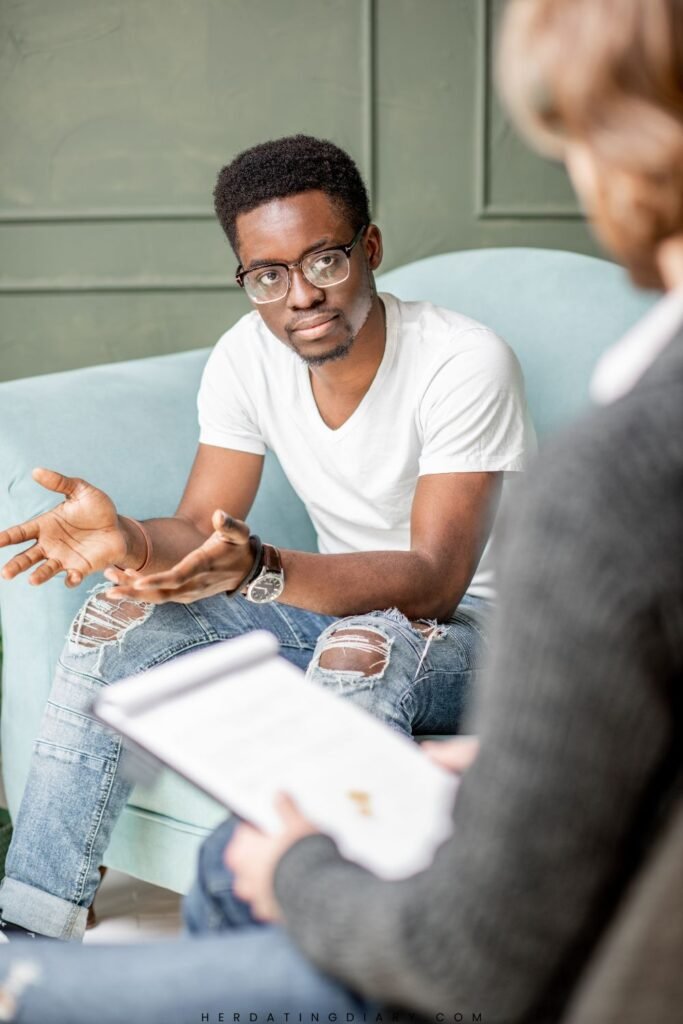
We saw a therapist because we had finally admitted to each other that the tools we had been using were not equal to the problem we were trying to solve with them.
There is a specific kind of pride that keeps couples from seeking help until the marriage is in such serious trouble that the help arrives years later than it should have.
The pride that says we should be able to figure this out ourselves.
The pride that treats asking for outside support as an admission of some fundamental inadequacy in the relationship or in the people inside it.
That pride is expensive.
What the therapist gave us was not solutions.
It was a room where both of us could say things we had been protecting each other from and have those things received without the defensive architecture that had made honest conversation so difficult at home.
It gave us a shared language for some of what had been happening and tools for the specific ways our particular patterns of avoidance and defense had been operating against us.
Choosing to use it was not a sign that the marriage was broken beyond our ability to fix.
It was a sign that we were serious enough about the marriage to use every available resource.
7. I Had to Look at My Own Part Honestly
The hardest part of a hard year in a marriage is not the other person but the moment when the focus shifts from what he did or did not do to what you brought to the conditions that produced the crisis.
Not to excuse his part or take on the responsibility that genuinely belongs to him, but to look honestly at your own contribution to the dynamic that led to where you ended up.
The ways I had been waiting for him to fix something I had not clearly told him was broken.
The moments where I had chosen the temporary peace of avoidance over the productive discomfort of honesty and called it grace.
Looking at my own part did not feel like clarity at first.
It felt like adding to an already heavy load, but it was the thing that made the repair mutual rather than one-sided.
A marriage where one person does all the examination and the other does none of it does not actually heal.
It relocates the imbalance, and we had already spent enough of that year in imbalance.
8. Choosing Each Other Had to Become a Daily Practice

The one thing that saved our marriage was not a single conversation.
It was not a revelation or a breakthrough or a moment where everything clarified and the hard year resolved into something clean.
It was the decision, made repeatedly, to keep choosing.
To choose honesty over the comfort of avoidance.
To choose his wholeness over the version of him I could manage more easily.
To choose the real marriage over the functional one.
To choose the discomfort of genuine intimacy over the safety of a partnership that was working on every level except the one that actually mattered.
Every marriage that survives a hard year does so because both people keep making that choice, even on the days when it does not feel like enough.
Even on the days when the distance feels bigger than the progress.
Even on the days when the choosing feels more like stubbornness than love.
It was stubbornness some days.
And some days, stubbornness is exactly what love looks like.
Every marriage has its hardest year.
What makes the difference is not the absence of a hard year.
It is what both people decide to do inside it.
The marriages that come out the other side are not the ones where nothing broke.
They are the ones where both people decided that what was broken was worth the work of putting back together.
Choose the work; it is harder than walking away, and it lasts longer than regret.